9ft of snow?! I only experienced such deep snow in an urban setting while living in Connecticut for a year. I spent a few years in Oregon but the snow in the area never got so deep while I was there. When I was in the US I was not yet able to identify many fungi as I was mainly obsessed with animals (especially salamanders) back then, so unfortunately I did not really appreciate the diversity of fungi there. Although once in Oregon I did attempt to dye some socks using a wolf lichen (Letharia vulpina) and a pressure cooker. That did not end well.


Salamander
- 38 Posts
- 185 Comments
Joined 4 years ago
Cake day: December 19th, 2021
You are not logged in. If you use a Fediverse account that is able to follow users, you can follow this user.
I see. So it is not necessarily that their mycelium are better at surviving the freezing temperatures, but rather that either they fruit quicker once conditions are acceptable or that their fruiting bodies are more cold tolerant. Thanks, it’s interesting.
Cool! I just read their wiki page and it says
A snowbank fungus, it is most common at higher elevations after snowmelt in the spring.
Snowbank fungus is a new term for me. Not sure yet what makes a fungus thrive through snow. Maybe they have anti-freeze proteins?
Does your area get a lot of snow?
 0·30 days ago
Wow, those spores are so bumpy, they are very interesting! Thanks for sharing :D
Hello ✌️ 😄
 0·1 month ago
I bought a National Instrument’s data acquisition card (PCIe-6535B) not knowing that National Instruments is not very Linux-friendly and I was not able to get it working. At least it was a used card so I did not pay to much for it, but I learned my lesson not to assume compatibility.
Once I also used ‘rm -rvf *’ from my home directory while SSH’d into a supercomputer (I made a syntax error when trying to cd into the folder that I actually wanted to delete). I was able to get my data restored from a backup, but sending that e-mail was a bit embarrassing 😆
Thank you for your work!

 0·1 month ago
Not intentional!
Took a bit of digging. The post was federated, but it showed up to me as “Removed by mod”:

Looking through the post’s moderation history, I find that the user was banned from community and then unbanned. I also see some removed posts from that same author to that same community around that same time.
My guess is that the most was removed by mod, then restored, but only the removal federated through and not the restore.
I have manually restored it, so you should be able to find it now: https://mander.xyz/post/977581/19535554
Wow, a really nice shot of a really nice frog!

Here, I’m assuming “it” is a conscious perception. But now I’m confused again because I don’t think any theory of mind would deny this.
Yes, the example of such a theory that is common is epiphenomalism. What I am contrasting in my answers is the epiphenomalist/hard-determinist framework with the physicalist/compatibilist one.
stimuli -> CPM ⊆ brain -> consciousness update CPM -?> black box -?> mind -?> brain -> nervous system -> response to stimuli
I can try to explain with such a diagram:
stimuli -> nerves -> brain input ports -> brain filtering and distribution -> Conscious brain processing via causal predictive modelling -> brain output ports -> nerves -> conscious action
                                                                                          |
                                                                                          -- > Unconscious processing -> brain output ports -> nerves -> unconscious action
So, the CPM is a process within the brain. The idea is that the brain is a computer that makes predictions by building cause-and-effect models. What is interesting about the mathematics of causal models is that the underlying engine is the counterfactual. The claim being made here is that mind itself is this counterfactual engine doing its work. The computational space that deals with the counterfactuals or “fantasies” is the essence of the mind.
This is not in any way a solution to the hard problem of consciousness. Rather, it is one of many frameworks compatible with physicalism, and it is the one I personally subscribe to. In this framework, it is a postulate that conscious experience corresponds to the brain’s counterfactual simulations within a generative model used for predicting and guiding action. This postulate does not prove or mechanistically explain consciousness. No physical theory currently does.

I’m going to stick with the meat of your point. To summarize, …
That is not quite how I see it. The linear diagram “brain -> black box -> mind” represents a common mode of thinking about the mind as a by-product of complex brain activity. Modern theories are a lot more integrative. Conscious perception is not just a byproduct of the form brain -> black box -> mind, but instead it is an essential active element in the thought process.
Ascribing predictions, fantasies, and hypotheses to the brain or calling it a statistical organ sidesteps the hard problem and collapses it into a physicalist view. They don’t posit a mind-body relationship, they speak about body and never acknowledge the mind. I find this frustrating.
That text was probably written by a materialist / physicalist, and this view is consistent within this framework. It is OK that you find this frustrating, and it is also alright if you don’t accept the materialist / physicalist viewpoint. I am not making an argument about materialism being the ultimate truth, or about materialism having all of the answers - especially not answers relating to the hard problem! I am specifically describing how different frameworks held by people who already hold a materialist view can lead to different ways of understanding free will.
Scientists often do sidestep the hard problem in the sense that they acknowledge it to be “hard” and keep moving without dwelling on it. There are many philosophers (David Chalmers, Daniel Dennett, Stuart R. Hameroff), that do like getting into the nitty-gritty about the hard problem, so there is plenty of material about it, but the general consensus is that the answers to the hard problem cannot be find using the materialist’s toolkit.
Materialists have is a mechanism for building consensus via the scientific method. This consensus mechanism has allowed us to understand a lot about the world. I share your frustration in that this class of methods does not seem to be capable of solving the hard problem.
We may never discover a mechanism to build consensus on the hard problem, and unfortunately this means that answers to many very important questions will remain subjective. As an example, if we eventually implement active inference into a computer, and the computer claims to be conscious, we may have no consensus mechanism to determine whether they “really” are conscious or not, just as we cannot ascertain today whether the people around us are conscious. In my opinion, yes, it is physically possible to build conscious systems, and at some point it will get tricky because it will remain a matter of opinion. It will be an extremely polarizing topic.
You are a radical vegan

Unfortunately the universe consists of mostly empty space and the infinitely thin cut passess between sub-atomic particles, barely tickling the vacuum fluctuations
Vaccines cure autism
But me and you don’t want the same things
But a sociopath
Permanently magnetized
In my view, neuroscience may contribute to clarifying questions like:
-
Do all brains support a conscious predictive model (CPM)?
-
Does adaptive behavior in brainless organisms suggest a primitive CPM?
-
What is the relationship between brain and mind?
But deeper questions, such as “What do we mean by mind?” or “Why assume weak emergence?” remain tied to the hard problem of consciousness, which currently lies beyond the reach of empirical science.
In trying to describe promising cognitive models, I buried my main point. I am not arguing that the brain and mind problem is close to a solution, or that science is close to resolving it.
Here is my actual point:
Certain materialist views unintentionally reproduce dualist thinking. Substance dualism claims that the mind exists outside physical law. Materialism, in contrast, holds that the mind emerges from brain activity. But when this emergence is explained only as complexity or undefined processing, a conceptual gap forms: brain -> black box -> mind. This reproduces dualism in practice, even if not in theory.
This gap renders consciousness a passive byproduct. It becomes a new kind of soul, unable to influence the body. A mind without agency.
Predictive processing and active inference models offer an alternative. They describe the brain as a generative system that continuously updates predictions based on sensory input. As summarized in a recent review:
Active inference casts the brain as a fantastic organ: a generator of fantasies, hypotheses and predictions that are tested against sensory evidence.
While these models do not resolve the hard problem, they help remove part of the black box. They suggest that consciousness may play a functional role in these feedback loops. It is not a detached illusion but a process embedded in how the brain operates.
For me, this shift changed how I think about free will. Not because it provides final answers, but because it allows me to see mental acts in a similar way to how I see muscle movement. These acts are constrained by physical laws, but they are still mine.
-
The thing that confuses me about Real Utopias is whether the author rejects revolution entirely, or wants cooperatives within a post-revolutionary Socialist system. The former has no real chance to actually damage Capitalism, while the latter is already used in countries like China as they gradually build into higher and higher stages of Socialism. Socialists already advocate for building up Dual Power, the Soviets for example were already in place before the October Revolution, but also understand that as this Dual Power grows the resistance from Capitalists grows as well, Revolution still becomes a necessity.
What I am getting so far is that he considers the revolutionary strategy to have a low probability of succeeding, and he argues that this is supported by historical evidence. The cooperatives are just one part of the strategy that he describes early on, once I am done with the book if I do think it is interesting enough I can try to summarize his thought.
In the textbook and in one of his online lectures he appears to start off aligned with Marx but diverges from Marxist theory. On Chapter 4 ("Thinking about alternatives to Capitalism, page 69) he describes his understanding of Marxist theory and in what ways he thinks differently. So, I suspect you will probably disagree with him strongly! Maybe I will too.
At this point I am not saying I have formed a strong opinion. The reason why Erik Olin Wright’s work brings me value is because his framework is aligned with my unpolished starting opinion of anti-capitalism through structural changes. His work helps me formalize my internal logic as I navigate through uncharted (for me) ideas about revolution as a mechanism for transformation.










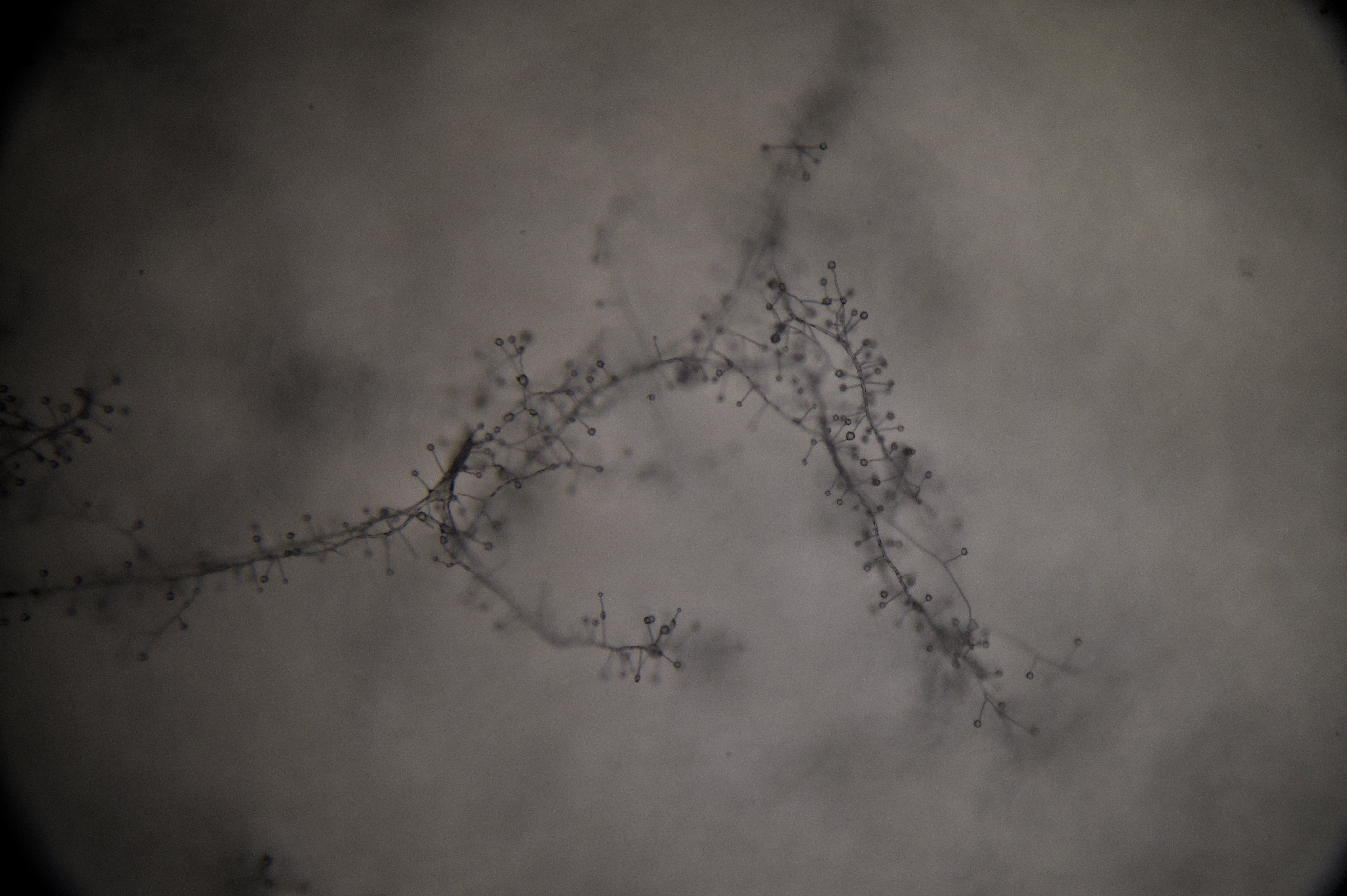



Would love to… When I was in Oregon this lichen was super abundant. At the moment I am living in Amsterdam (Netherlands), and I see mostly Xanthoria, Evernia, Rhizocarpon, and a few other lichen species that grow on city trees, but they are very small and spotty, nothing compared to the wolf lichen in Oregon. I do miss the Oregon forests with the old growth sequoia redwood trees and all that lichen.