
- cross-posted to:
- [email protected]
- cross-posted to:
- [email protected]
You must log in or register to comment.
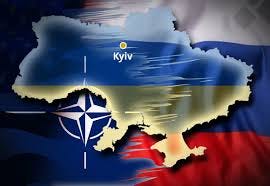
The Ukraine War is sold to the public as NATO being merely a third [?party?] that selflessly “help” Ukraine to defend itself against an expansionist Russia, motivated solely by territorial acquisition and restoring the Soviet Union. Framing the war as a simple struggle between good and evil is why NATO cannot negotiate or even pursue basic diplomacy, and peace depends on good defeating evil. In what is close to a copyright infringement of “war is peace” in George Orwell’s 1984, NATO Secretary General Jens Stoltenberg asserts that “weapons are the way to peace”.
In political propaganda, it is common to frame a war through a concept that everyone agrees with, such as the need to “help” Ukraine. We all want to help Ukraine preserve its sovereignty, territory and the lives of its citizens. However, instead of discussing what would help Ukraine, such concepts are given a fixed meaning to shut down debates. Any argument can then be framed as either being pro-Ukrainian or pro-Russian. However, what is bad for Russia is not automatically good for Ukraine. Yet, people who can be taught to speak in clichés can be taught to think in clichés. Commentary on NATO policies toward Russia is similarly framed as being pro-Western or pro-Russian, which circumvents an actual discussion about whether these policies are in the West’s interests or not.
Concepts such as “helping Ukraine” can then be filled with any content that often contradicts what “helping” entails, but corresponds with proxy war. When we unpack what NATO frames as “helping Ukraine”, we find that it rarely has the support from the majority of Ukrainians and it almost always ends up with disastrous consequences.
Classic Muscovite talking points. Well done, comrade.
You people have turned yourselves into unbelieveable dipshits
Care to engage with any of the arguments being presented? Or do you concede that you cannot refute them?
classic thought terminating cliche, well done dronie
Do you actually dispute anything brought up in the article, or do you reject it entirely based on the idea that Russia probably agrees with some of it?